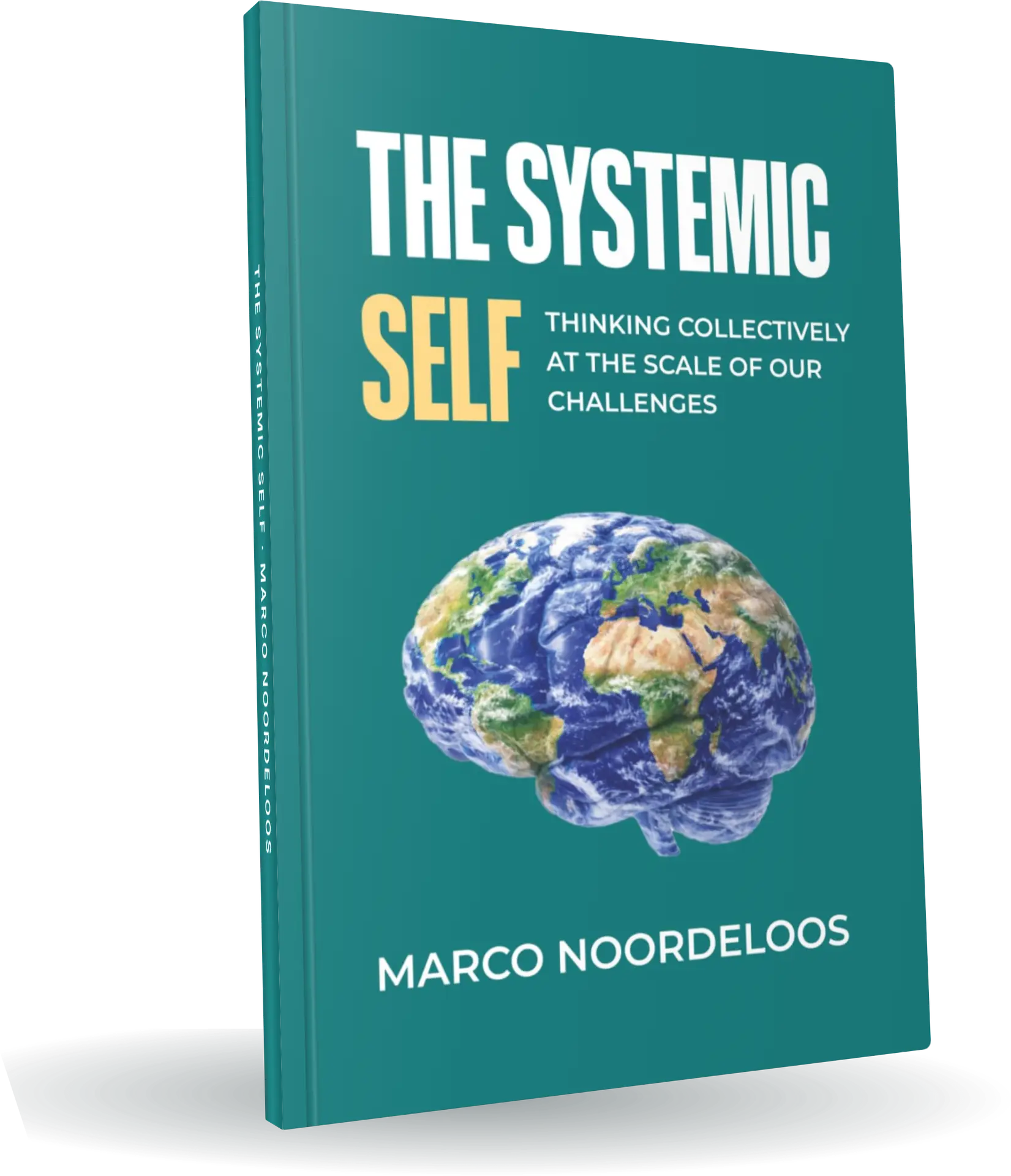
The Systemic Self
Thinking Collectively at the Scale of Our Challenges
Smart, capable people in well-run institutions, each making decisions that hold up on their own, keep drifting toward collective outcomes none of them would defend. We often explain this as a failure of leadership or of will. It is a failure of design.
available now on Amazon
The rooms we think in were built for a smaller world.
The Systemic Self argues that the architecture of how we meet and decide inside modern institutions is almost never designed. It runs on defaults: inherited cultural codes, a century of management habit, a narrow idea of what counts as professional thinking. Those defaults suppress the capacities our hardest problems demand. Neither climate nor AI fits inside the logic of a single system.
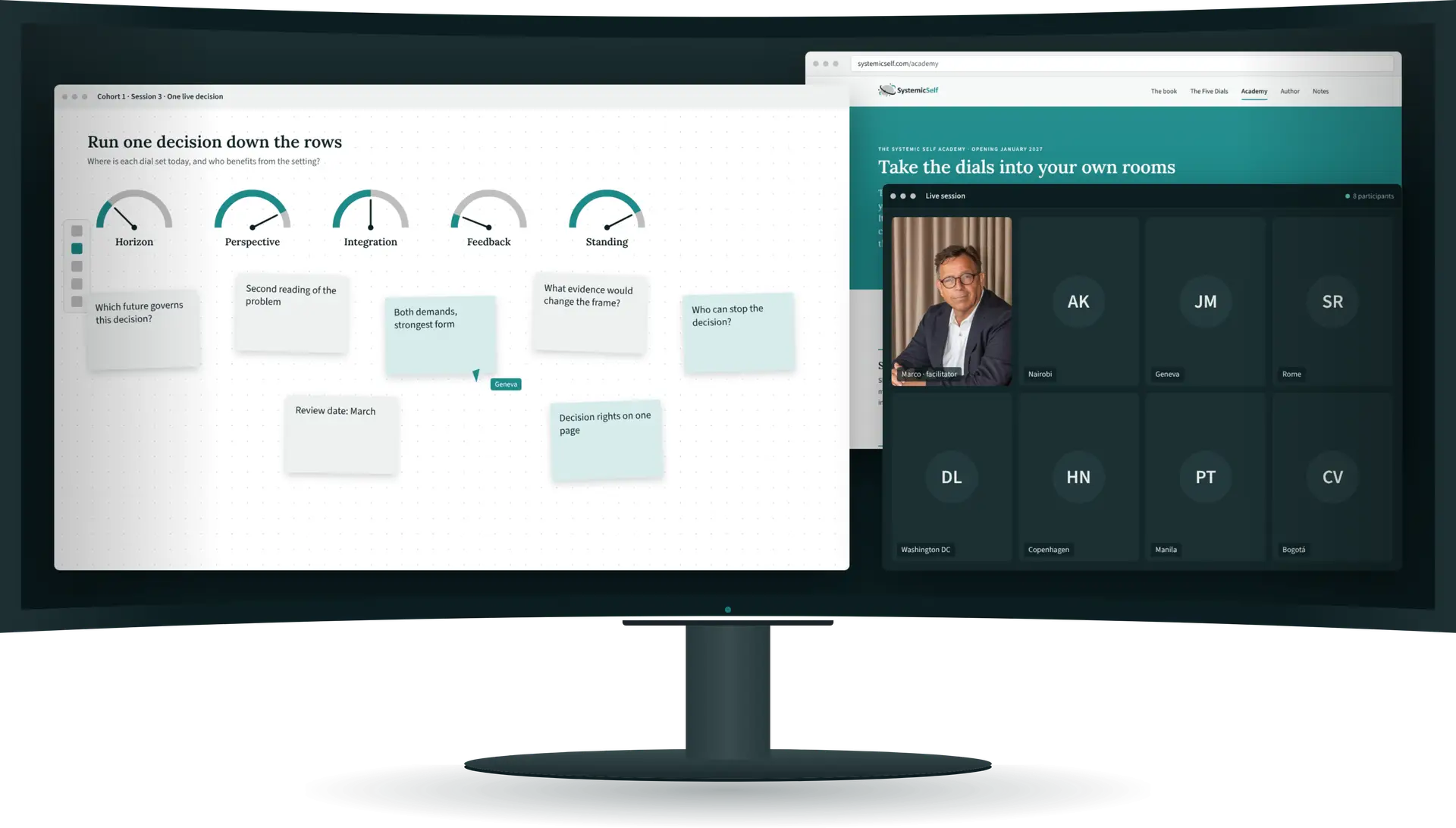
The book gives the people in the room one shared audit of a live decision: which future governs it, which readings of the problem are present, what stays in tension, what could change the frame, and whose judgement can alter the outcome. It turns the soft question of who is heard into the hard question of who can stop the decision. And it makes the case for designing the conditions we think inside as deliberately as we design strategy, structures, and budgets.
The collective capacity we need is scarcer by design than by nature. The architecture of how we think and decide together suppresses it. Change that architecture, and what the defaults suppress has room to appear. The book does not claim this has been solved but argues that this is the direction we now have to get better at. Read this book and argue with it. Then put it to work.
Emily Weeks, PhD
Executive Chairwoman, WICE
Senior professionals who suspect the meeting was designed to produce exactly what it produced
The readers the book has in mind sit at mid-career or later, in upper management or its equivalent, inside institutions that run on the professional default the book describes: UN agencies and multilaterals, research institutes and universities, foundations and international NGOs, and the sustainability and ESG functions of large companies.
It is written for the person who runs the room and wonders why the same team keeps producing the same results, and for the person sitting in that room with knowledge the room cannot register, who has started to pay for the translation.
Readers do not need a background in developmental psychology or organisational theory. The book carries its sources in more than a hundred pages of endnotes, so that the chapters can stay in the room.
Five settings nobody in the room remembers choosing
Every consequential room runs on five settings. The dials make them visible, so that the people in the room can decide, for the problem actually in front of them, where each one belongs.
Horizon
How far ahead does this decision look?
Perspective
Whose reading of the problem is in the room?
Integration
What are we resolving that may need to stay in tension?
Feedback
What would make us reconsider the frame itself?
Standing
Whose judgement, and which knowledge, can alter the outcome?
The Systemic Self Academy
The book gives you the compass. The Academy is where you learn to use it in the rooms you sit in: your management team, your committee, your board, your project consortium. It is co-designed and built with WICE specialists and experts from indigenous communities. Programs run online, so that people inside institutions on different continents can work on the same issues together.